Decide in advance if and how a book can be used for AI
Authors and publishers have the right to determine in advance whether and how their work may be used by AI companies. Consent is granted per title, per AI client, per type of use, and for a specific duration.
The AI economy changes almost weekly, and legislation is still very much in flux. That is why we operate from six guiding principles:
1.
Prior consent
Authors and publishers have the right to determine in advance whether and how their work may be used by AI companies. Consent is granted per title, per AI client, per type of use, and for a specific duration.
2.
Fair compensation
Authors and publishers are entitled to fair financial compensation for the use of their work. The ability to say ‘no’ to specific agreements, now and in the future, is a prerequisite for this.
3.
Content integrity and attribution
AI applications typically produce an interpretation of a work’s content rather than an exact reproduction. Whether this is a summary, a visualisation, an interactive application, or otherwise: authors have the right to ensure that the content is correct and properly attributed.
4.
Traceability
Authors and publishers have the right to have the use of their work traced, measured, and clearly reported within every AI application, as well as in training data.
5.
European focus
Bookpact.ai is designed to be independent of any single technological platform and, wherever possible, always chooses open-source and European alternatives.
6.
Sustainability
AI is energy-intensive. Bookpact.ai prioritizes AI companies that transparently report and demonstrably limit their energy and climate impact.
Why publishers choose Bookpact
Take back control
You approve every use and set your own terms. No automatic opt-ins, no bulk deals you didn’t agree to – just transparent choices about which books go where, and for what purpose.
Manage author mandate
Clear licensing terms and fair revenue splits mean you can bring authors into the opportunity, and consult them per deal. Exploit rights in a way that protects and rewards creators.
Fair pricing for the makers
Your content has value, and pricing should reflect it. We help you set rates that honour your IP whilst remaining competitive, ensuring authors and publishers are properly rewarded for every use.
European solution
Bookpact.ai is designed to be platform-independent, defaulting to open-source and European alternatives wherever possible — and built from the ground up to align with the European AI Act.
How Bookpact.ai works
Bookpact.ai is a two-sided platform that publishers can join on one side and AI companies on the other.
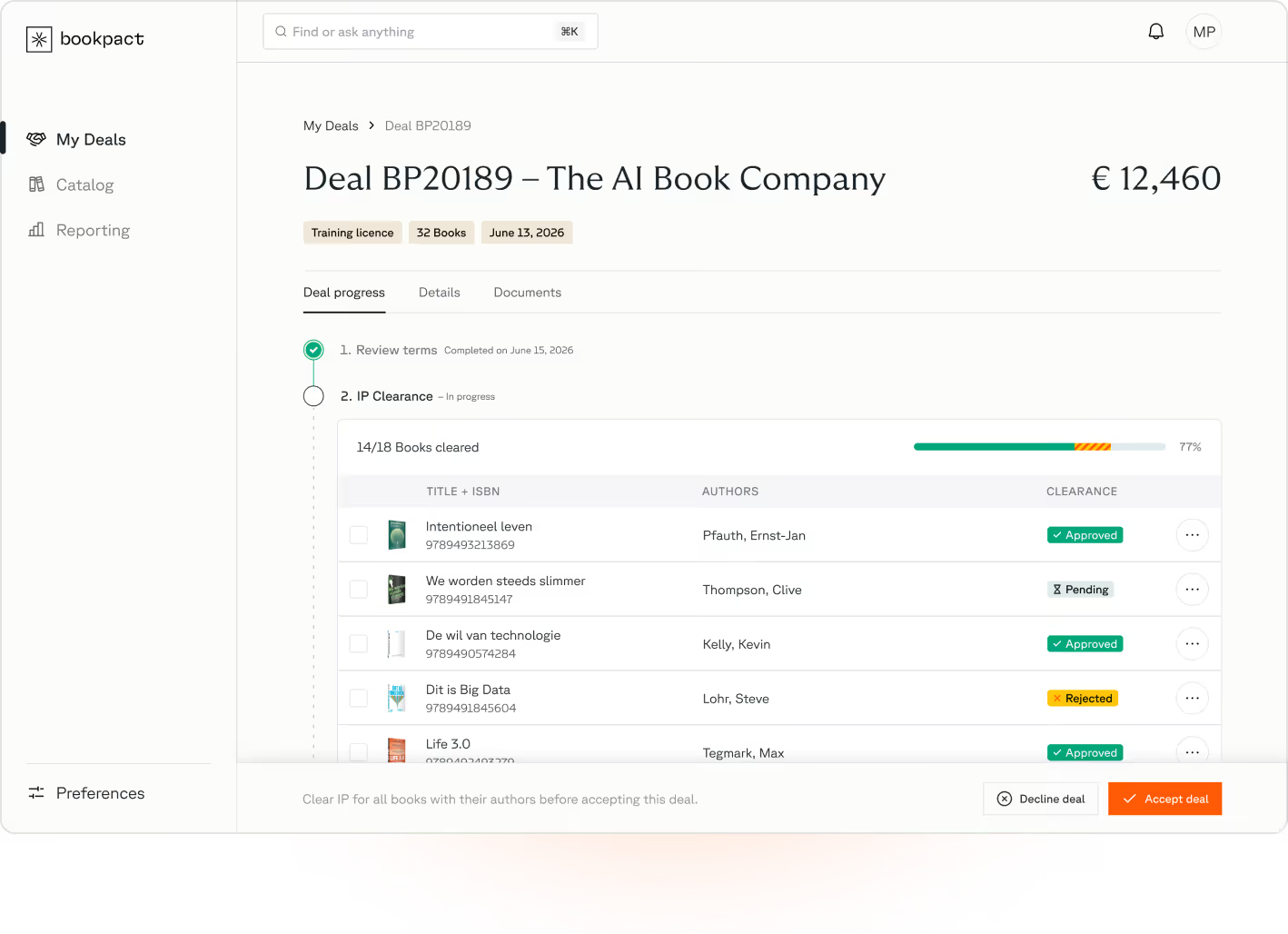
Within their own portal, publishers (with the consent of authors) specify which titles may be used and under what conditions. AI companies then submit offers for targeted licences on a per-title basis. Publishers either accept or decline these proposals.
Upon acceptance, access to the material is granted with legal and technical security measures in place. Publishers receive client- and title-specific reports that can be used in the royalty statement for the author.
4 types of use by AI
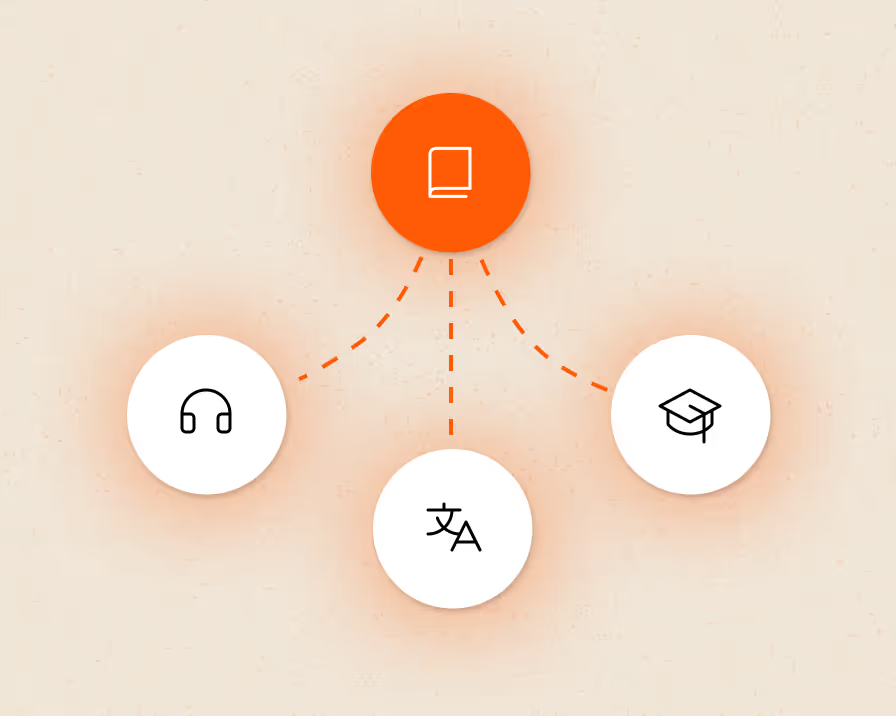
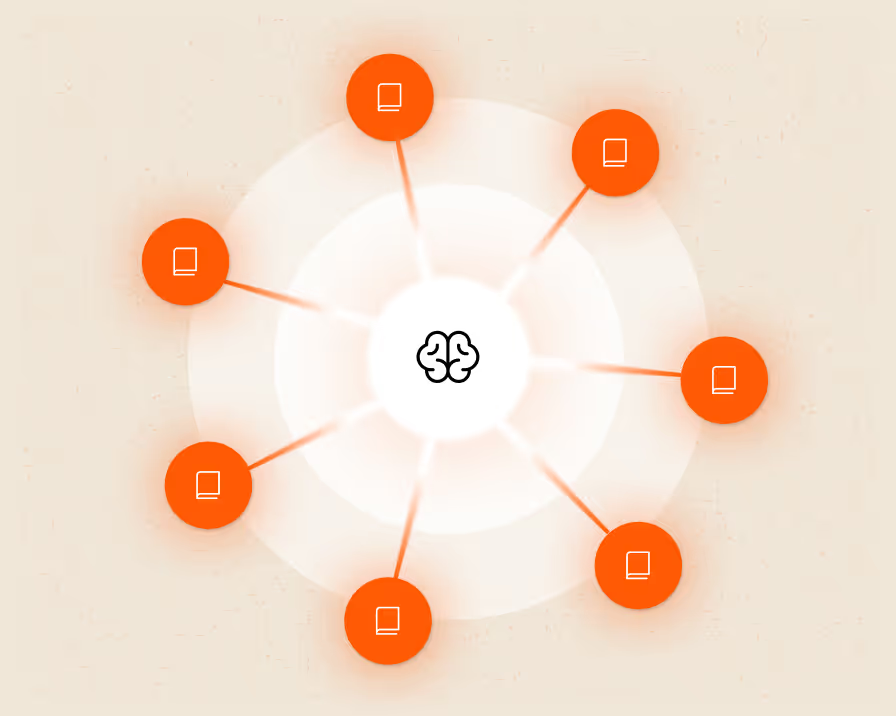
Bookpact.ai distinguishes four types of use for books within AI applications. Each type encompasses many variants, and different licensing arrangements are possible within each. Given the pace of technological development, this will continue to evolve.
1. Reference
AI applications consult books to answer user queries, with correct attribution to the end user. The manuscript is not shared; only the relevant passages areconsulted.
2. Transformation
The content of a book is converted into a new form: an AI-generated summary, audio version, video, or interactive application. The manuscript is shared, but is protected with a watermark and may not be used as training data.
3. Training
The content of a book is used to train or fine-tune language models. The manuscript is shared with a watermark.
4. Public AI
The work is made available for academic research, non-profit applications, or Dutch and European AI initiatives that could use a boost.
Curious how this works for you?
We are happy to answer any questions you may have, and have an open conversation about how Bookpact.ai could work for you. No strings attached.
✅ Your request has been sent. Our publisher participation agreement should be in your inbox soon.
Something went wrong while submitting the form. Please check if all fields have been filled in correctly.
Created by the book industry
Bookpact.ai is founded for and by the book industry: publishers and book trade professionals who understand the value of content, the importance of copyright and the responsibilities that come with both. We believe deeply that makers should be rewarded for their ideas and creations.
“The only way to keep creativity thriving in the age of AI is through fair attribution for makers. Bookpact.ai puts control back where it belongs: with the creator.”